 03 Nov, 2026
Carotid Artery Disease: Causes, Symptoms, Diagnosis and Stroke Prevention
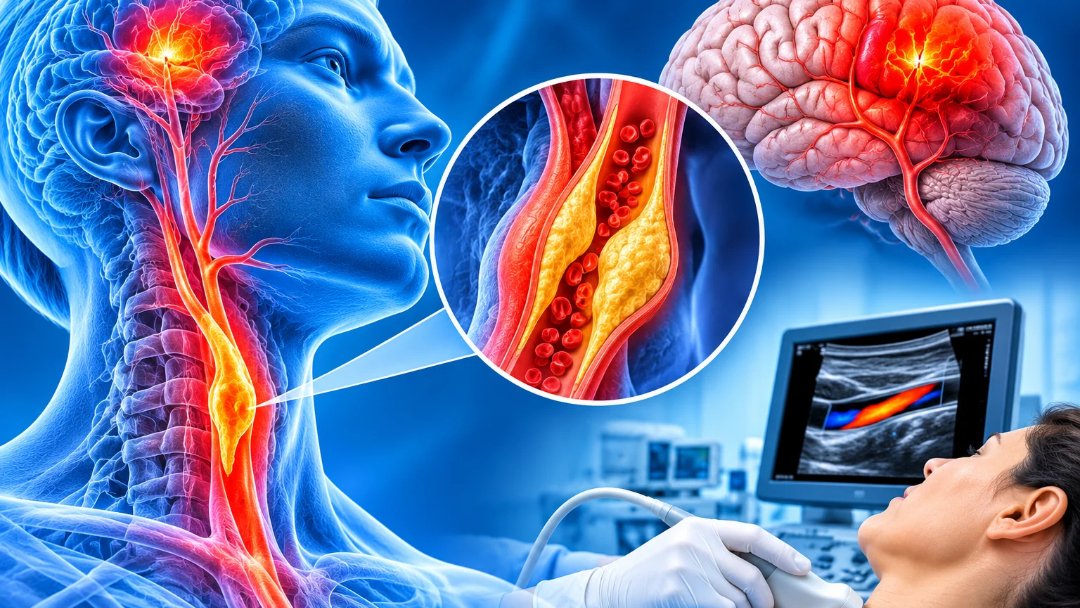
The carotid arteries are two major blood vessels located on either side of the neck. They carry oxygen-rich blood from the heart to the brain. When these arteries become narrowed or blocked due to the buildup of fatty deposits, a condition known as carotid artery disease develops.
This condition is important because reduced blood flow or the formation of blood clots can increase the risk of a stroke. Early diagnosis, appropriate treatment, and regular medical follow-up can help reduce the risk of serious complications.
What Is Carotid Artery Disease?
Carotid artery disease usually develops due to atherosclerosis, a process in which cholesterol, fats, calcium, and other substances accumulate inside the artery walls.
Over time, this buildup forms plaques that narrow the arteries and may restrict blood flow to the brain. In some cases, a plaque can rupture and release a blood clot or debris that travels to the brain, potentially causing a stroke.
Carotid artery disease may remain silent for years, making risk assessment and appropriate screening important for individuals with relevant risk factors.
What Are the Common Causes and Risk Factors?
Several factors may contribute to the development of carotid artery disease:
-
High blood pressure
-
High cholesterol levels
-
Diabetes
-
Smoking and tobacco consumption
-
Increasing age
-
Physical inactivity
-
Obesity
-
Family history of cardiovascular disease
These factors can contribute to damage inside blood vessels and accelerate plaque formation.
Symptoms of Carotid Artery Disease
Many patients do not experience noticeable symptoms until a transient ischemic attack (TIA) or stroke occurs.
Warning signs may include:
-
Sudden weakness or numbness on one side of the body
-
Sudden difficulty speaking or understanding speech
-
Temporary loss of vision in one eye
-
Sudden dizziness or loss of balance
-
Sudden confusion
-
Difficulty coordinating movements
A transient ischemic attack may cause temporary stroke-like symptoms that resolve within minutes or hours. It is still a medical emergency because it can indicate an increased risk of a future stroke.
Seek emergency medical attention immediately if any of these symptoms occur, even if they disappear.
How Is Carotid Artery Disease Diagnosed?
Early diagnosis helps determine the severity of narrowing and the appropriate management strategy.
1. Carotid Doppler Ultrasound
This non-invasive investigation uses sound waves to assess blood flow through the carotid arteries and identify areas of narrowing.
2. CT Angiography (CTA)
CTA provides detailed images of blood vessels and helps identify the location and extent of arterial narrowing.
3. MR Angiography (MRA)
MRA uses magnetic resonance imaging techniques to evaluate blood vessels and may be recommended in selected patients.
4. Digital Subtraction Angiography (DSA)
DSA is a specialized catheter-based investigation that provides detailed vascular images. It may be used when additional anatomical information is needed for treatment planning.
The appropriate investigation depends on the patient's clinical condition and initial test findings.
Treatment Options for Carotid Artery Disease
Treatment depends on the degree of narrowing, whether the patient has experienced stroke-like symptoms, overall health, and the risks associated with intervention.
1. Medical Management
Many patients require risk-factor management and prescribed medications. These may include cholesterol-lowering medicines, antiplatelet medication, and treatment for high blood pressure or diabetes, depending on individual needs.
Patients should never start or stop these medicines without medical guidance.
2. Carotid Endarterectomy
Carotid endarterectomy is a surgical procedure in which the surgeon removes plaque from the narrowed carotid artery to improve blood flow.
It may be recommended for selected patients depending on the degree of narrowing, symptoms, and individual procedural risk.
3. Carotid Artery Stenting
Carotid artery stenting is an endovascular procedure in which a catheter is guided through the blood vessels to the narrowed carotid artery. A stent is placed to help keep the artery open.
It may be considered in selected patients after evaluating the anatomy, clinical history, and risks of different procedures.
How Can You Reduce the Risk of Carotid Artery Disease?
Healthy lifestyle choices can support cardiovascular and brain health.
-
Maintain healthy blood pressure.
-
Monitor and manage cholesterol.
-
Keep blood sugar under control.
-
Avoid smoking and tobacco.
-
Follow a balanced diet.
-
Stay physically active.
-
Follow prescribed medical treatment.
-
Attend regular health check-ups when recommended.
Why Consult a Neurosurgical and Endovascular Specialist?
Carotid artery disease requires careful assessment of vascular narrowing, stroke risk, symptoms, and individual medical history.
A specialist can help evaluate whether medical management, carotid surgery, or an endovascular procedure is appropriate.
Conclusion
Carotid artery disease is an important risk factor for ischemic stroke. Because the condition may not cause symptoms in its early stages, identifying risk factors and seeking appropriate medical assessment can be valuable.
Dr. Vivek Vaid, Brain & Spine Neurosurgeon and Endovascular Neurosurgeon, provides specialist evaluation for neurological and cerebrovascular conditions. Individual assessment helps determine appropriate management and available treatment options.
Medical disclaimer: This article is for educational purposes only and does not replace professional medical advice. Sudden weakness, speech difficulties, or vision loss require immediate emergency medical attention.
Frequently Asked Questions
1. Can carotid artery disease cause a stroke?
Yes. Narrowing or plaque-related clot formation in the carotid arteries can reduce blood flow to the brain or block a brain artery, potentially causing a stroke.
2. Can carotid artery disease exist without symptoms?
Yes. Many individuals have no symptoms until a TIA or stroke occurs.
3. Is carotid artery stenting a major surgery?
Carotid stenting is a minimally invasive, catheter-based procedure rather than open surgery. Its suitability depends on individual clinical factors.
4. What is the difference between carotid endarterectomy and stenting?
Endarterectomy involves surgically removing plaque from the artery, while stenting uses a catheter to place a support inside the narrowed artery.
5. Can lifestyle changes reverse carotid artery disease?
Lifestyle changes can help manage risk factors and support vascular health, but they do not reliably remove established plaque. Medical assessment and appropriate treatment remain important.